
About My Services
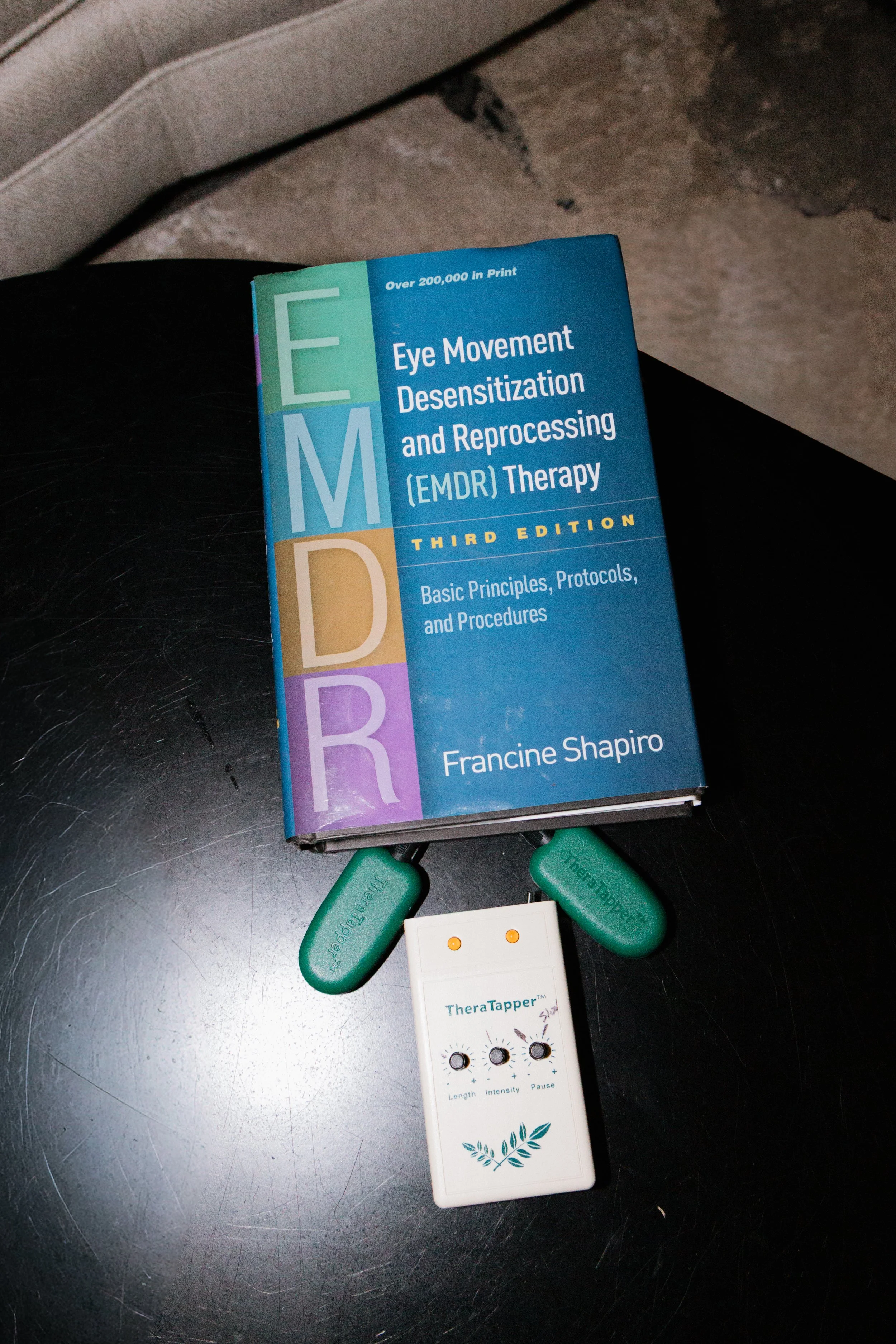
EMDR (Eye Movement Desensitization and Reprocessing) is an extensively researched, evidence-based psychotherapy that helps people heal from trauma and other distressing life experiences.
I often explain it this way: sometimes an experience is simply too much for the brain to fully process in the moment. It’s as though the brain takes a “screenshot” of the experience, along with the emotions, body sensations, thoughts, and negative beliefs connected to it. Instead of getting properly filed away as something from the past, it gets tossed into what I call the brain’s proverbial dumpster.
The problem is, the dumpster doesn’t always stay closed. Something in the present—a sight, smell, sound, person, place, or even a bodily sensation—can work almost like facial recognition on your phone. Your brain recognizes something familiar and pulls that old screenshot back up. Your thinking brain may know, “That was then. I’m safe now,” while your nervous system responds as though it’s happening all over again.
EMDR helps the brain reprocess those experiences so they can feel like something that happened in the past rather than something you are still experiencing in the present. The memory isn’t erased, but the emotional and physical distress connected to it can decrease, and negative beliefs can shift toward healthier, more adaptive beliefs.
For more information on EMDR, click here

Grief, Loss & Life-Limiting Illness
Anxiety & Stress Management
Anxiety has a way of pulling you out of the present. I often call it “time traveling.” Your mind jumps ahead, trying to anticipate what might happen or what could go wrong, or it travels backward, replaying what happened, questioning your decisions, and wishing you could change the past. Either way, you are spending a lot of energy somewhere other than where you are right now.
Therapy for anxiety and stress is not just about talking about what makes you anxious. I want you to understand what is happening in your brain and body and learn practical tools for responding differently. Together, we identify the thoughts, patterns, and triggers that keep anxiety going and work on bringing your attention back to what is actually happening in the present.
The goal is not to eliminate anxiety or stress completely. Both are normal parts of life. The goal is to recognize when anxiety is taking over, know what to do when it happens, and spend more of your life in the present.
Trauma & PTSD
Trauma is not always one catastrophic event. Sometimes it is a single experience that changes how you see yourself or the world. Other times, it is an accumulation of experiences that left you feeling unsafe, powerless, or always on guard. You may know what happened is in the past, but your brain and body do not always get that message.
Trauma can show up as nightmares, intrusive memories, avoidance, anxiety, or reactions that feel bigger than what is happening in the moment. It can also affect how you see yourself, others, and the world around you.
Trauma therapy is not about forcing you to relive the past. We work at your pace, building the skills needed to feel safe and grounded. When you are ready, EMDR can help process experiences that are still carrying an emotional or physical charge so they can begin to feel like something that happened in the past rather than something you are still living. The goal is not to erase your past. It is to help your past stop having so much control over your present.
Life Transitions
Life can change in ways you expected—and in ways you never saw coming. Whether you’re navigating a new role, a relationship change, caregiving, or simply wondering, “Who am I now?”, therapy can help you make sense of where you are, reconnect with yourself, and move forward with greater clarity and confidence.
Grief is brutal. There is no way to go above it, below it, or around it. You have to go through it. I am trained as a Grief Educator through David Kessler, one of the world’s leading experts on grief and loss and author of Finding Meaning: The Sixth Stage of Grief. Whether you are grieving the loss of a spouse, child, family member, friend, or even a beloved pet, grief is grief. Grief can also begin before a death occurs. A terminal or life-limiting diagnosis can bring grief for the person facing the illness as well as for the people who love and care for them.
There are no “shoulds” or “should nots” about how you grieve, how deeply you feel the loss, or how long it takes. Grief takes a shape of its own, and it looks different for every person and every relationship. My role is to hold space for you as you navigate your grief, help you understand what you are experiencing, and make room for the emotions that come with loss. The goal is not to “get over it.” It is to learn how to carry what cannot be changed, find meaning after the loss, and move forward while continuing to honor the significance of who or what you have lost.
EMDR Therapy




"The curious paradox is that when I accept myself just as I am, then I can change.”
—Carl Rogers